Simple Easter Sensory Bins Preschoolers Actually Play With
You’ve got Easter around the corner, a preschooler with endless energy, and about 15 minutes to pull together something that actually keeps them busy.
Sensory bins are the secret weapon for this exact moment. They’re tactile, open-ended, and give little hands something purposeful to do while you catch your breath. The Easter theme makes it seasonal without requiring a craft degree or a trip to three different stores.

This post may contain affiliate links meaning I make a small commission with no extra cost to you. Read our full disclosure policy here.
Creating Your Easy Easter Sensory Bin
The magic is in the setup. You need the right base, the right tools, and a few themed additions that make it feel special without overcomplicating it. When you nail those three pieces, you get 30 to 45 minutes of engaged play instead of a three-minute dump-and-done disaster.
Here’s how to build an Easter sensory bin that actually works for preschoolers.
Choosing the Right Base Material
The base is the foundation of the entire bin, and it’s where most bins either succeed or flop in the first five minutes. You want a filler that feels good to touch, moves easily through small hands, and doesn’t turn into a nightmare to clean up. For this simple sensory bin, we chose to use kinetic sand because young children LOVE it, and you can easily vacuum it up.
Pick one base and stick with it. Mixing bases sounds fun but usually just dilutes the sensory experience. Preschoolers benefit more from deeply exploring one texture than skimming across three. If your child mouths everything, skip small items like rice and beans and go with larger materials like large dried pasta, green shredded paper, or Easter grass.
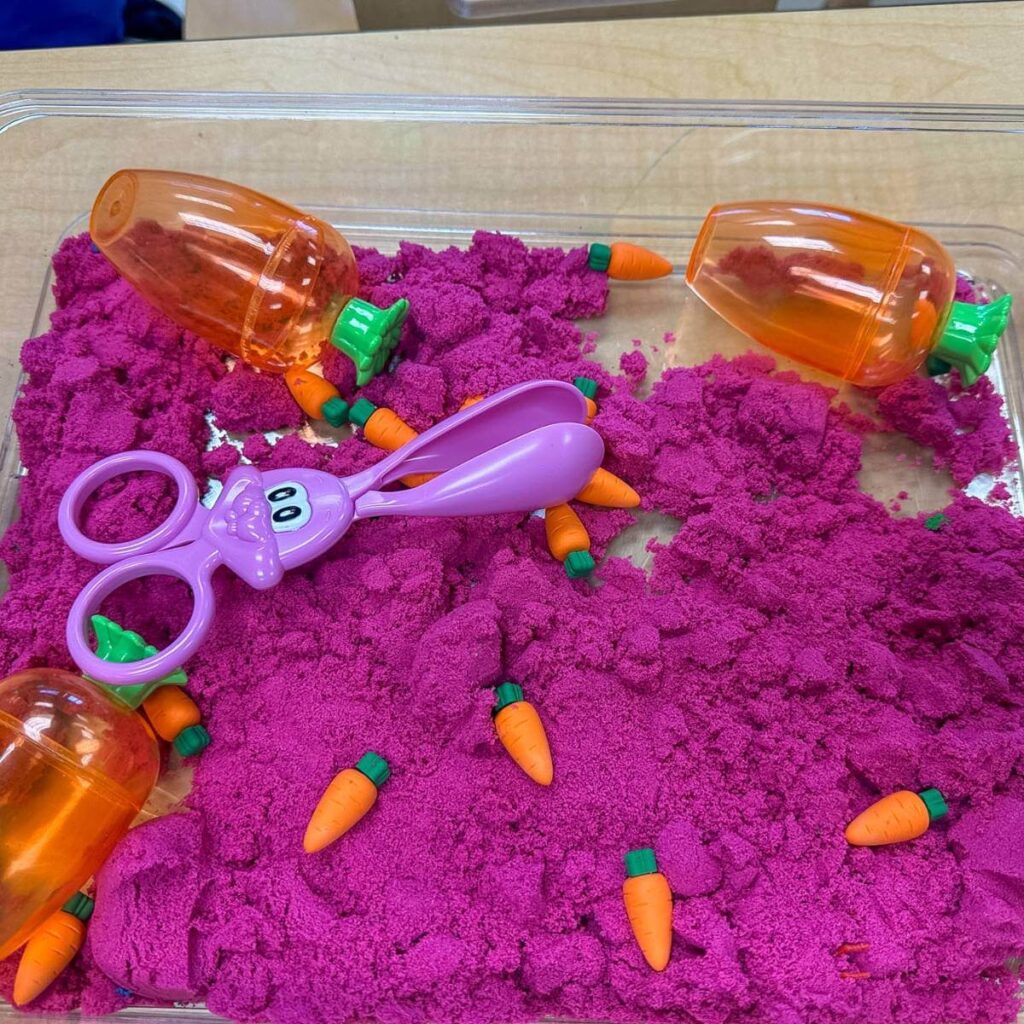
The container matters too. A clear plastic bin lets them see what’s inside before they dig in, and a size between 6 to 10 quarts gives them room to scoop without constant overflow.
Buy it here: Pink or Purple Kinetic Sand
Adding Easter-Themed Objects
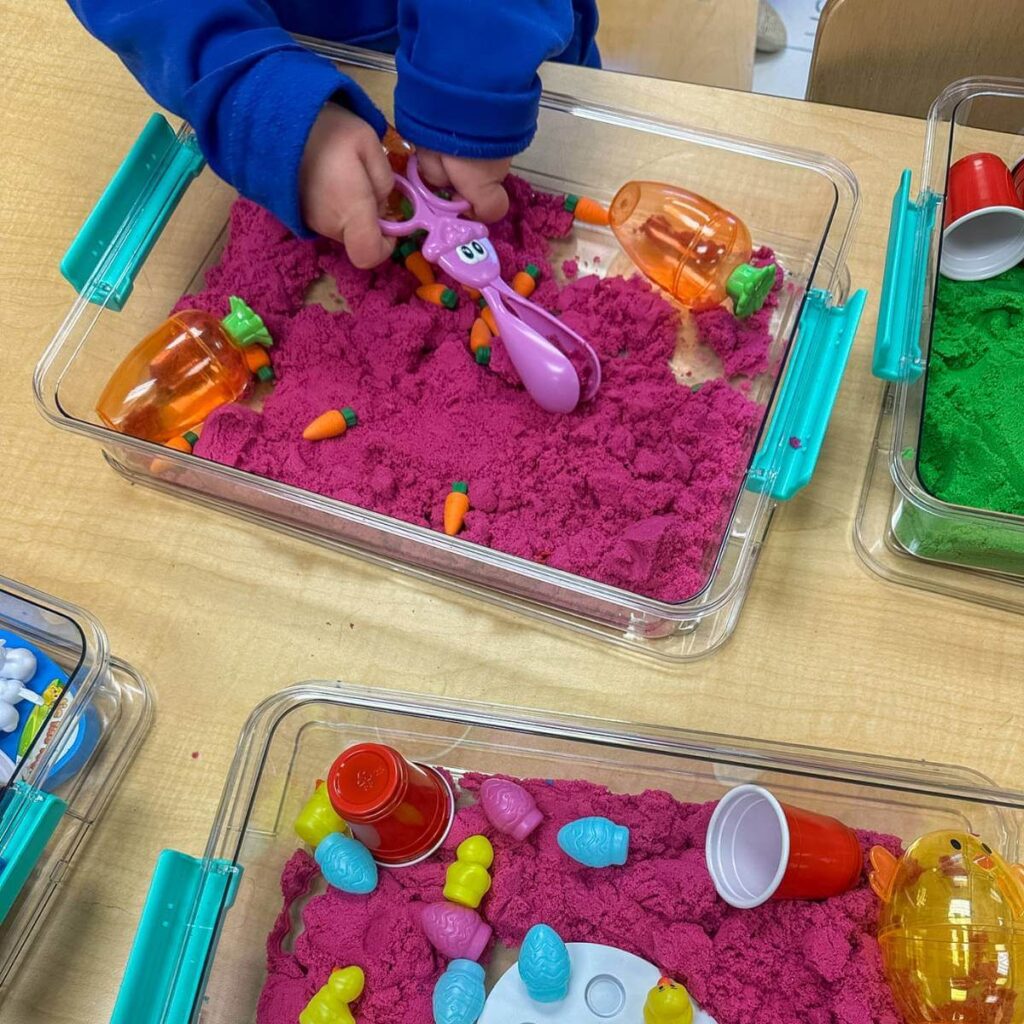
This is where the bin goes from “random textures” to “Easter sensory play,” but you don’t need to buy a single thing if you don’t want to. We found everything besides the kinetic sand at the dollar store. And something as simple as those plastic eggs make great scooping utensils while building fine motor skills.
Start with what creates the hunt-and-find dynamic that preschoolers are wired for. Bury small objects in your base material and let them excavate. The repetition of digging, discovering, and relocating is where the learning happens.
Easter items that work perfectly:
- Plastic Easter eggs in multiple sizes (the hunt never gets old)
- Small toy chicks, bunnies, or lambs
- Pom poms in pastel colors
- Silk flowers or fake grass patches
- Mini baskets for sorting and transferring
Hide 10 to 15 items throughout the base. Preschoolers thrive when there’s just enough challenge to keep them hunting without frustration. And they will love Easter egg hunts in their sensory bin!
These are the little Easter toys we got from the Dollar Tree.
Add the Tools That Extend Play Time
Here’s the difference between 10 minutes of play and 45 minutes: the tools you include.
Preschoolers don’t just want to touch the materials. They want to manipulate them, move them, transfer them, and control them. Give them the tools to do that and the play deepens immediately.
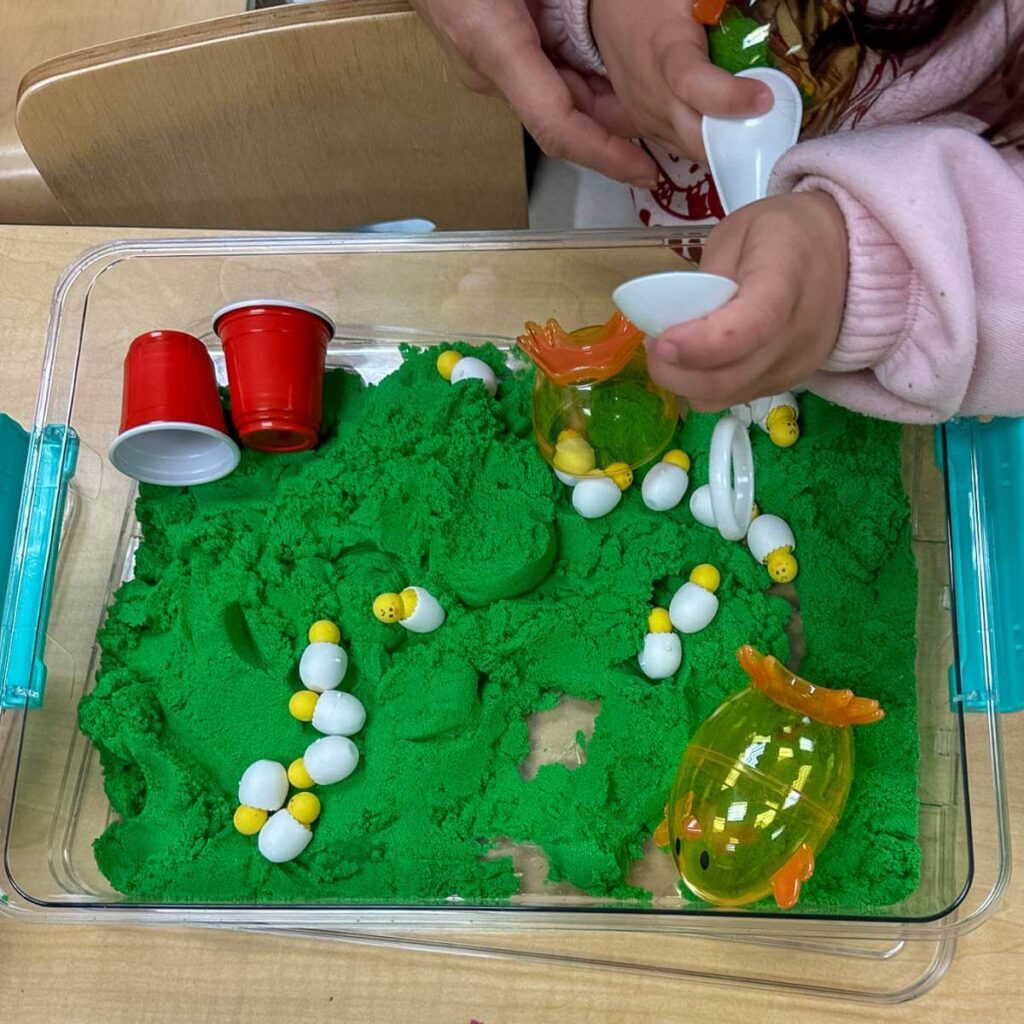
- Scoops and spoons in different sizes. Big scoops let them move volume. Small spoons require precision. Both are valuable for fine motor skills and they’ll switch between them naturally.
- Tongs or tweezers. These turn the bin into a challenge and are a great way to build fine motor skills. Picking up a pom pom with tongs requires focus, control, and hand strength.
- Funnels and cups. Pouring and filling are irresistible to this age group. Add a funnel and watch them pour over and over again.
- Small containers or muffin tins. Sorting is a preschool obsession. Give them a muffin tin and a pile of pom poms and they’ll have even more fine motor tools.
- Silicone ice cube trays. These add a satisfying pop factor when they press items into the spaces, plus they’re easy to clean and reuse.
One of the keys to keeping your child engaged in this independent play is don’t dump all the tools in at once. Start with two or three, then rotate in new ones after a few play sessions.
Keeping It Contained Without Killing the Fun
Sensory bins are messy by nature, but there’s messy play and then there’s rice embedded in every floor crack for three weeks. Read all about the benefits of messy play.
Set the bin up in an easy-to-clean zone. Kitchen floor, bathroom tile, or even outside on the patio if weather allows.
Teach the boundary before they start playing. Materials stay in the bin or on the mat. Anything outside that zone goes back in before they keep playing. Preschoolers can follow this rule when it’s clear and consistent. Enforce it the first few times and it becomes automatic.
We have a whole guide to sensory bins for little learners, especially if this is your child’s first time doing a sensory bin.
Rotating Themes to Keep It Fresh
One Easter bin is great. Variations of this simple Easter bin across the season keeps them coming back while having so much fun!
You don’t need new materials just new combinations. So keep the same base and rotate out fun items or utensils to use in the bins. This fun Easter sensory bin usually stays around for three weeks because we rotate the items in it.
You can also shift the play objective without changing the materials. One day it’s free play. The next day you add a counting challenge: find 10 eggs. The day after that, it’s a color sorting game. The bin stays the same but your child starts thinking in different ways.
What They’re Actually Learning
It looks like play, and it is. But it’s also working multiple developmental areas at the same time in such a fun way.
Fine motor skills: Pinching, scooping, pouring, and transferring all strengthen the hand muscles they’ll need for writing, buttoning, and zipping.
Sensory processing: Exposure to different textures helps their brain organize sensory input and build tolerance for new tactile experiences.
Focus and attention: Open-ended play like this requires sustained attention, planning, and task completion. They’re building executive function without realizing it.
Math and categorization: Sorting by color, counting eggs, comparing sizes, and filling containers all introduce early math concepts through hands-on exploration.
Language development: Describe what they’re doing while they play. “You’re pouring the beans into the cup. Now it’s full. Now it’s empty.” You’re building vocabulary in context, which is how language sticks.
An Easter sensory bin isn’t just a time killer. It’s a tool that meets your preschooler exactly where they are developmentally and gives them space to explore, experiment, and engage without needing you to entertain them every second. Set it up once and you’ll use the concept all year with different themes. Sensory bins are a fun learning activity that we think is worth it!
More Easter Activities
If you make this simple Easter sensory bin, pair it with one of our favorite crafts for a full day of Easter fun. Our crafts are also playful ways to get in more fine motor practice!